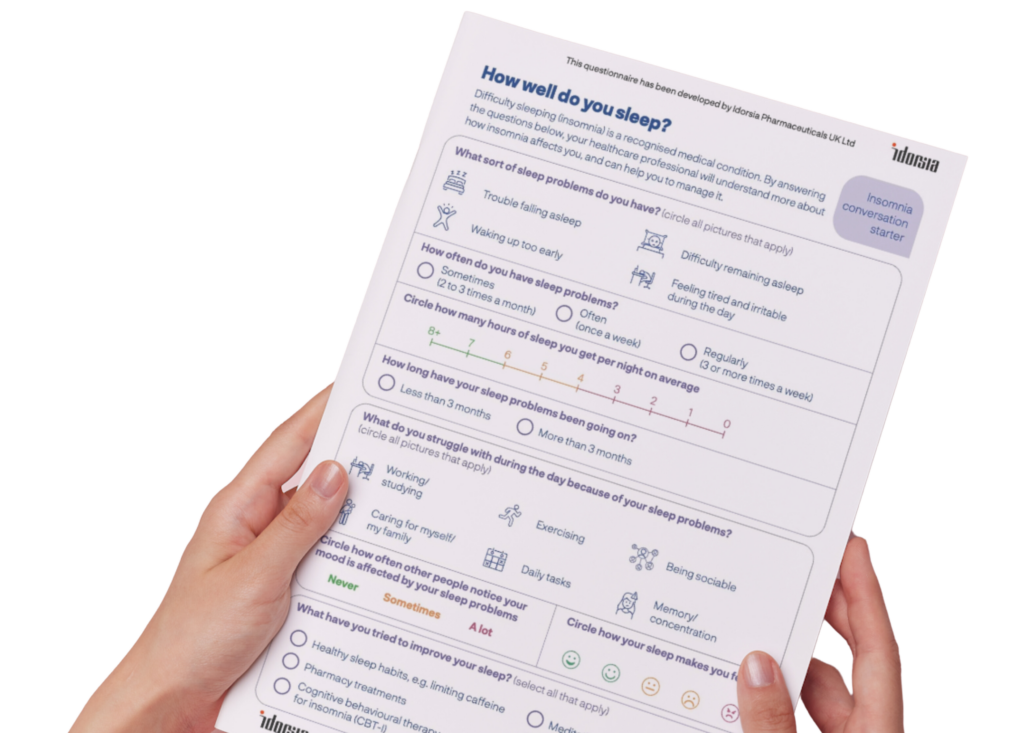
What are the symptoms of chronic insomnia?
- Chronic insomnia lasts at least 3 months, causing daytime fatigue, irritability, anxiety, poor concentration, morning sleepiness, and reduced social/work performance1,2.
- Understanding chronic insomnia helps rethink how to manage it and get the restorative sleep needed for overall well-being.
Many of us go through times when we have trouble sleeping. This is known as insomnia. The meaning of the word is, literally, ‘without sleep’.2
But, for some people, insomnia goes way beyond that. It becomes something that lasts for at least 3 months and leaves people tired during the day.1,2
Not only does it impact your nights, but people with chronic insomnia also have difficulties during the day like feeling tired, irritable or not being able to concentrate.1,2
You’re not alone in feeling like this though. About 1 in 10 people are going through exactly the same thing.3

Chronic insomnia not only affects nighttime sleep
– it can also significantly impact daytime activities.

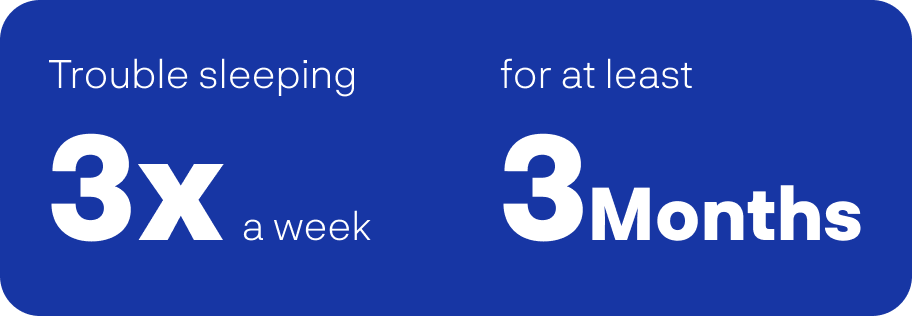
Everyone has trouble sleeping now and then. But when trouble sleeping becomes something that lasts for at least 3 times a week for 3 months or longer, it’s known as chronic insomnia.1

- Feeling anxious
- Morning sleepiness
- Fatigue
- Bad work performance
- Reduced social interactions
- Poor concentration
- Irritability and bad moods
What does an overactive brain have to do with chronic insomnia?
Well, the science suggests that people with chronic insomnia have an overactive brain at night.4,5
So what’s going on?
Parts of the brain that should be in sleep mode are instead still active, making it harder to fall asleep and stay asleep until morning.4,5
Without restorative sleep you may feel tired and really not at your best during the day.4,5
The good news is that now we know more about what’s going on with chronic insomnia, we can rethink how to manage it.

We can also understand why some approaches may not be the answer.7
Because although some insomnia medications have a sedative effect, and work by making you feel drowsy, they don’t give you the right kind of sleep you need to feel rested during the day.8
With a better understanding of chronic insomnia, we have new ways of thinking about how to manage it and get the restorative sleep you need to be at your best during the day.9–12
But what about chronic insomnia?
Many of us go through times when we have trouble sleeping. But for some, it goes way beyond that.
When it carries on for months, or even years, it’s not just trouble sleeping. It’s chronic insomnia, a recognised medical condition.1
Science suggests that people with chronic insomnia have an overactive brain at night, and this can make it hard to fall asleep and stay asleep until morning.4,5 This lack of restorative sleep can leave you feeling tired and really not at your best during the day.4,5
But when does insomnia become chronic?
There are two things we need to consider when we look at when insomnia becomes chronic insomnia.
The main difference between the two types comes down to how long your trouble sleeping has been going on for.1,3,6,13
Chronic insomnia doesn’t just impact the night though – it impacts the day as well. When you have difficulties falling asleep (sleep initiation) or staying asleep (sleep maintenance) for a long time, you’re unable to get restorative sleep.1,2 This means you may feel tired and not really at your best during the day.4,5
Differences between acute and chronic insomnia1,3,6,13
- You’ve had trouble sleeping at least 3 times a week for less than 3 months
- If the trigger resolves, then your insomnia usually also resolves
- You’ve had trouble sleeping at least 3 times a week for at least 3 months or more
- Even if the trigger resolves, you still struggle with insomnia
The importance of getting the restorative sleep you need for the days ahead
Let’s start with a simple fact. We need sleep as much as we need food, water and air.14,15
But why do we sleep? Why is it so important?
Well, sleep is essential for pretty much every aspect of our health and wellbeing.15

Metabolism

Mental health

Growth and repair

Brain function

Immunity
How much restorative sleep do I actually need?
While it’s well known that most adults need about seven to nine hours of sleep per night, the quality of your sleep matters just as much as the amount.9
Because even if you sleep for the recommended amount of time, but you wake up multiple times during the night, or find yourself tossing and turning for hours, the quality of your sleep may not be good enough.22 This can mean you’re not getting the right kind of sleep you need to feel rested during the day.22 Plus, you may not be experiencing all of the health benefits that sleep has to offer.22
Sleep is a very individual thing.
To help you figure out if you’re getting not only enough sleep but also good quality sleep, consider your health, activity levels, and typical sleep patterns. Here are some questions you may want to ask yourself:
- Do I feel re-energized and look forward to the day when
I wake up in the morning? - Do I spend a lot of energy during the day e.g. do a lot of sport or have a job that involves a lot of physical activity?
- Am I able to think clearly at work and carry out tasks efficiently?
- Do I sleep for longer on the days when I’m not at work?
Take a look at how well you are currently sleeping and adjust based on your answers to the questions – this will help you figure out your optimal amount of sleep.
Common tips to improve sleep hygiene
Sleep hygiene is a blend of your sleeping environment and your habits before bedtime. But with busy schedules and long working hours, it can be easy for sleep hygiene to go out the window.
You’ve probably heard all this a million times before and so you may have tried some of these techniques already. Nevertheless, it’s a good reminder anyway to consider integrating the following sleep hygiene techniques into your night-time routine.
They may help you to relax and wind down so you can get a good night’s rest:
Learn more about how to manage insomnia
Switch screens for music or reading
Try not to watch TV in the place where you sleep or spend the time before you go to sleep endlessly scrolling on your phone. The blue light from electronics can keep your brain awake and unable to fall asleep.23
Save your bed for sleep
It’s important to only get into bed when you feel you’re ready to nod off because restricting time spent in bed may help to improve some symptoms of insomnia24
Keep your bedroom cool
Your core body temperature decreases as you fall asleep so a bedroom temperature between 19–21°C, which may be cooler than you’re used to, is optimum for sleep.25,26
Avoid day-time napping
Try to save your sleep time for night-time. Napping in the day may interrupt your sleep drive, making it harder to drift off when it comes to the evening.27
Get some daily movement
Regular exercise can help improve the quality of your sleep.28,29 Try to exercise earlier in the day as science suggests working out less than 1 hour before bedtime may make it harder to fall asleep.30
Reduce your caffeine intake
You may have heard this many times before, but caffeine from a morning coffee can still be in your system by bedtime.31 So, try to switch your post lunchtime pick-me-up for a more hydrating, less stimulating beverage.
Why do people with chronic insomnia struggle to sleep?
An active and alert brain is brilliant during the day, isn’t it?
An active brain telling you to stay awake at night? Not so good. Who wants to be wide awake thinking about your to-do list, when you could be dreaming about desert islands and giving your brain the rest it needs?
So, what’s happening then?
Well, the science suggests that people with chronic insomnia have an overactive brain at night, and research has helped us to better understand what’s going on.4,5
Parts of the brain that should be in sleep mode are instead still active, making it harder to fall asleep and stay asleep until morning.4,5
This lack of restorative sleep that can leave people feeling tired and really not at their best during the day.1,4
What can be done to help people with chronic insomnia sleep?
Because although some insomnia medications have a sedative effect, which work by making you feel drowsy, they don’t give you the right kind of sleep you need to feel rested during the day.8
With a better understanding of what happens when we have an overactive brain at night, we have new ways of thinking about how to manage it and get the restorative sleep you need to be at your best during the day.9–12
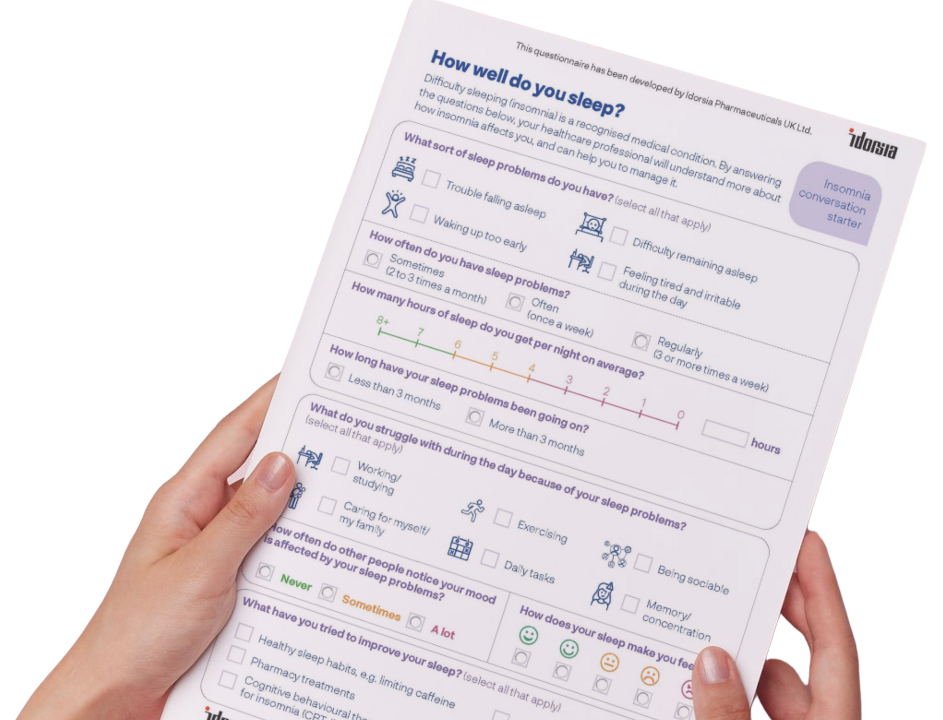
Ready for a fresh conversation about chronic insomnia?
Living with chronic insomnia because of an overactive brain means that it’s hard to drift off at night and hard to have a good day. Just know you’re not alone if you’re currently going through this.
References
1. Reimann D, et al. J Sleep Res. 2017; 26(6): 675–700.
2. Roth T. J Clin Sleep Med. 2007; 3(5 suppl): S7–S10.
3. Vargas I, et al. Brain Sci. 2020; 10(2): 71.
4. Reimann D, et al. Sleep Med rev. 2010; 14(1):19–31.
5. Killgore, et al. Neuroreport. 2013; 24(5): 233–40.
6. Ellis JG, et al. J Psych Res. 2012; 46: 1278–1285.
7. Krystal AD, et al. Psychiatr Clin North Am. 2015; 38(4): 843–860.
8. Bastien CH, et al. Sleep. 2003; 26(3):313–7.
9. Chaput JP, et al. Nat Sci Sleep. 2018; 10: 421–430.
10. El-Mekkawy L, et al. Egypt J Neurol Psychiatry Neurosurg. 2022; 58(1): 1–7.
11. Drake CL, et al. J Clin Sleep Med. 2014; 10(7): 733–741.
12. Schutte-Rodin S, et al. J of Clin Sleep Med. 2008; 4(5): 487–504.
13. Basta M, et al. Sleep Med Clin. 2017; 2(2): 279–291.
14. Grandner MA. Sleep Med Clin. 2017; 12(1): 1–22.
15. Medic G, et al. Nat Sci Sleep. 2017; 9: 151–161.
16. Sharma S and Kavuru M. Int J Endocrinol. 2010; 2010:270832.
17. Copinschi G, et al. Front Horm Res. 2014; 42: 59–72.
18. Sleep Foundation. Obesity and Sleep. Available at: https://www.sleepfoundation.org/physical-health/obesity-and-sleep. Accessed August 2022.
19. Schmitz NCM, et al. Clocks & Sleep. 2022; 4: 66–79.
20. Matricciani L, et al. Sleep Health. 2018. 4(4): 339–348.
21. Vyazovskiy VV. Nat Sci Sleep. 2015; 7: 171–184.
22. Nelson KL, et al. Nurs Forum. 2022; 57(1):144–151.
23. Schechter A, et al. J Psychiatr Res. 2018; 96: 196–202.
24. Maurer LF, et al. Sleep. 2020; 12; 43(11):zsaa096.
25. Okamato-Mizuno and Mizuno K. J Physiol Anthropol. 2012; 31(1): 14.
26. Harding EC, et al. Front Neurosci. 2019; 13:336.
27. Ancoli-Israel S and Martin JL. J Clin Sleep Med. 2006; 2(3): 333–42.
28. Banno M, et al. Peer J. 2016; 6: e5172.
29. Dolezal BA, et al. Adv Prev Med. 2017: 1364387.
30. Stutz J, et al. Sports Med. 2019; 49(2):269–287.
31. Institute of Medicine (US) Committee on Military Nutrition Research.2001. 2, Pharmacology of caffeine. Available from: https://www.ncbi.nlm.nih.gov/books/NBK223808/. Accessed August 2022.
EUC-IDS-00086 April 2025