Did you know that there are different types of insomnia?
- Insomnia has different types, mainly acute and chronic insomnia.1-4
- Chronic insomnia is linked to an overactive brain at night, disrupting sleep.5
- It is now recognized as a medical condition, requiring targeted treatments beyond sedatives.1
Understanding insomnia
Insomnia is often used as a catch-all term to describe regular trouble sleeping. Insomnia isn’t that simple though because there’s more than one type.
What are the types of insomnia?
You may be familiar with insomnia, but have you ever heard of acute and chronic insomnia?
These are two types of insomnia and cases of acute insomnia can, in fact, develop into chronic Insomnia.
The main difference between the two types comes down to how long your trouble sleeping has been going on for.1-4
Many of us go through periods when we have trouble sleeping. But for some, it goes beyond that, carrying on for months, or even years.
When someone has insomnia, it’s usually because something has triggered it. This could be something like stress about work, anxiety about money, or grief from losing a loved one.5 Once these triggers resolve, or as time passes, most people are able to sleep again.1–4 This is known as acute insomnia.1–4
But what about chronic insomnia?
This happens when insomnia symptoms last for 3 months or longer. In a lot of cases, even if the triggers that originally caused insomnia resolve, you may still not be able to sleep.1,2,4

Differences between acute and chronic insomnia1,5,6,11
- You’ve had trouble sleeping at least 3 times a week for less than 3 months
- If the trigger resolves, then your insomnia usually also resolves
- You’ve had trouble sleeping at least 3 times a week for at least 3 months or more
- Even if the trigger resolves, you still struggle with insomnia
What’s going on in the brain in chronic insomnia?
An active and alert brain is brilliant during the day, isn’t it?
An active brain telling you to stay awake at night? Not so good. Who wants to be wide awake thinking about your to-do list, when you could be dreaming about desert islands and giving your brain the rest it needs?
So, what’s happening then?
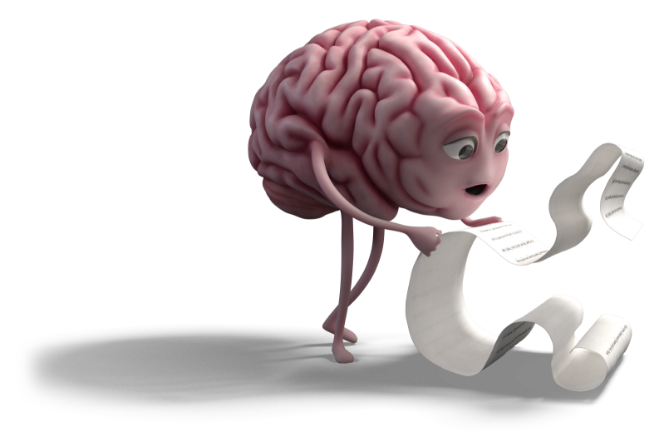
Well, the science suggests that people with chronic insomnia have an overactive brain at night, and research has helped us to better understand what’s going on.5,6
Parts of the brain that should be in sleep mode are instead still active. This stops the brain’s sleep action from taking over at bedtime, making it hard to fall asleep and stay asleep until morning.5,6
This lack of restorative sleep can leave people feeling tired and really not at their best during the day.5,6

Understanding the different types of insomnia
Here’s the difference between the two types.
Acute insomnia lasts for less than 3 months and when the trigger of the insomnia resolves, such as a stressful time at work, the insomnia goes away.1-4 Chronic insomnia, on the other hand, lasts for 3 months or longer with sleepless nights that continue even after the trigger resolves.1-4
Discover more about chronic insomnia
Insomnia hasn’t always been understood this way
What’s more common? Acute or chronic insomnia?
How does insomnia compare to other types of sleep disorders?
Did you know that insomnia is 1 in around 100 different sleep disorders?7 And out of these 100, it’s considered to be the most common.4
Let’s take a look at some of the other well-known sleep disorders that you may have heard before.
Insomnia
We now define insomnia as either acute, which lasts for 3 months, or chronic, which lasts for 3 months or longer1-4.
Sleep-related breathing disorders
They are many different kinds of sleep-related breathing disorders, such as obstructive sleep apnea10. This is where the airway sometimes narrows during sleep, which means that somebody can’t breathe and suddenly needs to wake up8.
Symptoms are actually very similar to insomnia, with a lot of people reporting morning sleepiness, irritability, memory loss and problems at work8.
Narcolepsy
Narcolepsy is the infamous, but rare, disorder whereby someone suddenly falls asleep9.
One of the main characteristics of narcolepsy is excessive daytime sleepiness9, a symptom which is also experienced by many people suffering from chronic insomnia1.
Classical narcolepsy is accompanied by attacks where you lose all your muscle control; these attacks can be caused by outbursts of strong emotions like laughter or anger9.
Circadian rhythm disorders
Our bodies typically run on 24-hour schedules that respond to levels of daylight10.
That’s why most people prefer to go to bed at night instead of the day10. Sometimes, this internal body clock, which is called the circadian rhythm, is affected, and thrown off11.
If you’ve ever taken a long-haul flight and flown over multiple time zones, then you may have experienced jet lag11. This is a common, but temporary, circadian rhythm disorder that happen because our internal clocks are not made to be instantly reset11. This means that, for several days, your body may stick to timings based on the place you flew from11.
Then there’s working outside of the regular 9 to 5 time slot. Night shift and irregular working times are common for people working in security, hospitality, and the emergency services. People working these sorts of hours often find that they have symptoms of insomnia, like trouble falling asleep and excessive sleepiness10.
Sleep walking
Do you know anyone who sleepwalks? Sleepwalking is a form of parasomnia which is a group of disruptive sleep-related disorders.12
People with parasomnia disorders may also experience sleep terrors or eat excessively in their sleep, with no recollection of getting up and going to the kitchen12. Parasomnias can happen during both rapid eye movement (REM) sleep, a stage of sleep when your eyes move around rapidly behind closed lids, and non-rapid eye movement (non-REM) sleep.12
Sleep walking normally occurs in the third stage of NREM sleep. 12 People may get up and walk around or even play musical instruments in their sleep.5 This may be disruptive not only for them but also anyone they share a room with, and it can be quite dangerous12.
Restless leg syndrome
Finally, there’s restless legs syndrome. People with restless legs syndrome feel an intense urge to move their legs at night. 13
It’s associated with rather unpleasant tingling sensations in the legs where the only way to relieve the pain is to keep the legs moving13.
The discomfort of restless leg, particularly at night, often leads to sleep disturbances and can develop into insomnia13.
Why do some people go on to have chronic insomnia?
Well, the science suggests that people with chronic insomnia don’t just have trouble sleeping, they have an overactive brain at night.5,6
This is when parts of the brain that should be in sleep mode are instead still active, making it harder to fall asleep and stay asleep until morning.5,6
Without restorative sleep you may feel tired and not really
at your best during the day.5,6
What’s next for managing chronic insomnia?
The good news is that we now know more about what’s going on with chronic insomnia so we can rethink how to manage it.
We can also understand why some approaches may not be the answer.14
Because although some Insomnia medications have a sedative effect, which work by making you feel drowsy, they don’t give you the right kind of sleep you need to feel rested during the day.14
So, with a better understanding of chronic insomnia, we have new ways of thinking about how to manage it and get the restorative sleep you need to be at your best during the day.15-18
Want to know what may be behind chronic insomnia?
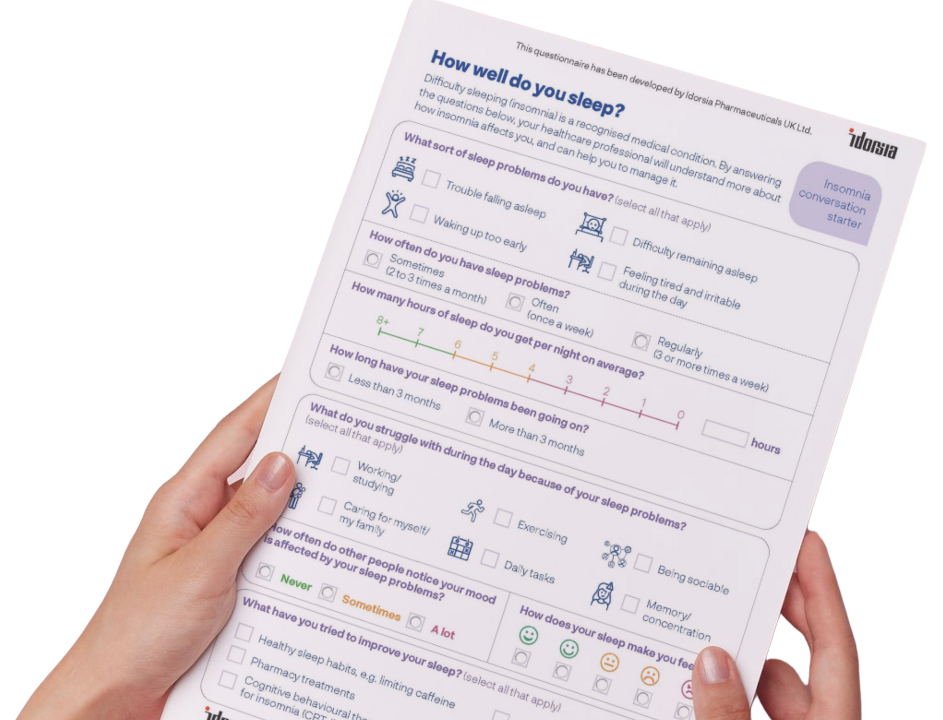
Ready for a fresh conversation about chronic insomnia?
When you’re living with chronic insomnia, it may have started off as something short term and acute.
Just know you’re not alone if you’ve currently going through this.
References
1. Reimann D, et al. J Sleep Res. 2017; 26(6): 675–700.
2. Vargas I, et al. Brain Sci. 2020; 10(2): 71.
3. Ellis JG, et al. J Psych Res. 2012; 46: 1278–1285.
4. Basta M, et al. Sleep Med Clin. 2017; 2(2): 279–291.
5. Riemann D, et al. Sleep Med Rev. 2010; 14(1): 19–31.
6. Killgore, et al. Neuroreport. 2013; 24(5): 233–40.
7. Medic G, et al. Nat Sci Sleep. 2017; 9: 151–161.
8. Ryu HS, et al. Clin Otolaryngol. 2016; 1(4):395–401.
9. Bassetti CLA, et al. Nat Rev Neurol. 2019; 5(9):519–539.
10. Wickwire EM, et al. Chest. 2017; 151(5): 1156–1172.
11. Eastman CI and Burgess HJ. Sleep Med Clin. 2009; 4(2): 241–255.
12. Singh S, et al. Cureus. 2018; 10(12): e3807.
13. Ekbom L and Ulfberg J. J Intern Med. 2009; 266(5):419-431.
14. Winrow CJ and Renger JJ. British J of Pharm. 2014; 171(2): 283–293.
15. Chaput JP, et al. Nat Sci Sleep. 2018; 10: 421–430.
16. El-Mekkawy L, et al. Egypt J Neurol Psychiatry Neurosurg. 2022; 58(1): 1–7.
17. Drake CL, et al. J Clin Sleep Med. 2014; 10(7): 733–741.
18. Schutte-Rodin S, et al. J of Clin Sleep Med. 2008; 4(5): 487–504.
EUC-IDS-00086 April 2025